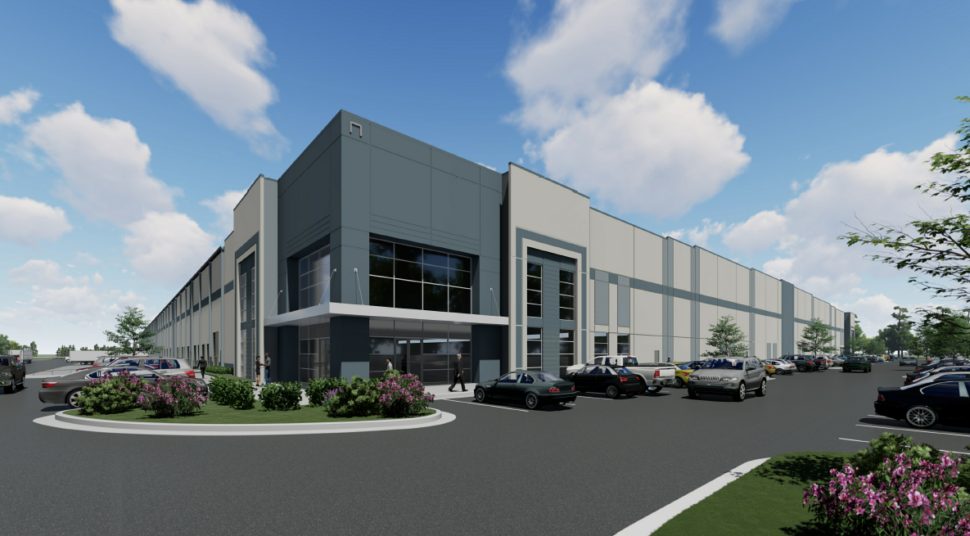
BKM Capital Partners, Kayne Anderson Launch $1.5B Joint Venture to Expand Small- and Mid-Bay Industrial Real Estate in Houston and Beyond

BKM Capital Partners and Kayne Anderson have formed a $1.5 billion joint venture aimed at expanding small- and mid-bay industrial real estate holdings across the United States, with Houston emerging as a central focus of the firm's national growth strategy, the Newport Beach, California-based fund manager announced Feb. 24, 2026.
The joint venture — structured as an institutional equity partnership — is designed to provide capital for BKM's continued acquisition and value-add repositioning of multi-tenant light industrial assets. The announcement came as BKM disclosed that its total assets under management surpassed $3.2 billion at year-end 2025, up from a regional platform concentrated in the Western United States.
National Expansion Anchored by Texas Industrial Real Estate Acquisitions
Throughout 2025, BKM completed a series of single-asset and portfolio-scale acquisitions representing nearly six million square feet across 42 properties in six states, executed on behalf of BKM Industrial Value Fund III and several institutional partnerships, including the Kayne Anderson joint venture. The firm entered Texas and Florida for the first time during the year, scaling rapidly across Houston and Dallas-Fort Worth while deepening its presence in Phoenix, the San Francisco Bay Area, and Seattle.
"2025 was the year where everything we've been building toward came together," said Brian Malliet, Founder, Chief Executive Officer, and Chief Investment Officer of BKM Capital Partners. "We didn't just grow larger; we became more complete as a platform. From national expansion and institutional partnerships to operational execution and research, every part of the organization scaled in a deliberate way. That discipline allowed us to enter new markets while preserving the performance standards that define BKM."
BKM's Value-Add Strategy and Institutional Capital Structure
BKM's investment approach centers on acquiring multi-tenant light industrial properties at discounts to replacement cost in infill locations, then deploying capital improvements to stabilize occupancy and capture rent growth. The $1.5 billion Kayne Anderson joint venture provides institutional equity capital to support that strategy at national scale.
The firm's off-market sourcing approach has been central to its ability to acquire assets in what it has characterized as an underserved niche within the broader industrial real estate sector. Multi-tenant small-bay properties have historically attracted fewer institutional bidders than larger single-tenant distribution facilities, a dynamic that BKM has cited as a source of pricing advantage.
Platform Scale and 2026 Outlook for Industrial Real Estate
BKM's growth in 2025 — from a Western U.S. regional manager to a national platform with more than $3.2 billion in assets under management — represents a significant expansion of its institutional footprint. The firm's 42-property, six-state portfolio spans markets including Houston, Dallas-Fort Worth, Phoenix, the San Francisco Bay Area, and Seattle, with additional markets entered during the year.
The Kayne Anderson joint venture, alongside BKM Industrial Value Fund III, provides the capital infrastructure to continue that strategy across additional markets as the firm pursues further real estate acquisitions in 2026 and beyond.
More Joint Ventures
CBRE Investment Management Backs €500 Million IOS Platform in Germany as URBZ Capital and NW1 Partners Launch Terryn
Triten Real Estate Partners, Principal Asset Management Form Joint Venture to Recapitalize 17-Property IOS Portfolio
Dexus and Boral Form Joint Venture to Develop 630-Hectare Industrial Precinct at Ravenhall