JLL's Victor Prime Office Index Holds Near Flat in Q1 2026 as Geopolitical Uncertainty Weighs on Germany's Office Real Estate Markets
FRANKFURT, May 8, 2026 — JLL's Victor Prime Office performance indicator recorded only a marginal increase of 0.3% quarter-over-quarter in the first quarter of 2026, ending March at 174.5 index points across Germany's five major office real estate markets: Berlin, Düsseldorf, Frankfurt, Hamburg, and Munich. The result represents a near-stagnation following the cautiously optimistic momentum observed in the fourth quarter of 2025, according to a JLL press release dated May 8, 2026.
Geopolitical Disruption Slows Germany's Office Investment Market
JLL attributed the slowdown in part to the outbreak of the Iran war, which the firm said triggered a significant deceleration in market activity. Despite the headwinds, the firm noted that transactions continued to close through late February and March.
"The geopolitical disruptions have not brought the overall market to a standstill — numerous transactions crossed the finish line in the second half of February and in March, which is quite positive compared to investor behavior during earlier external shocks of similar magnitude," said Ralf Kemper, Head of Value and Risk Advisory at JLL Germany. "However, uncertainty has increased enormously and many market participants, particularly equity providers, are currently waiting to see how things develop."
Kemper added that while the investment market has slowed considerably, transactions involving top-tier properties continue to occur at current yield levels. "Buyer-induced price adjustments at the end of sales negotiations are observed regularly, but they remain within moderate bounds," he said. "The seller side does not appear willing or compelled to accept significant price discounts, so transactions either proceed within seller expectations — albeit more slowly — or property sales are withdrawn."
Prime Yields Stable Across Five Cities; Hamburg Leads Annual Performance
Prime yields remained unchanged across all five markets in Q1 2026, ranging from 4.05% in Hamburg and Munich to 4.60% in Frankfurt. JLL noted that Germany remains relatively expensive by European standards, with many other European office markets offering higher yields — though those markets also carry higher risk-free rates tied to elevated sovereign debt levels.
On a quarterly basis, Berlin posted the strongest gain among the five cities, rising 1.6% to 182.9 index points, driven entirely by leasing market momentum and associated prime rent increases. Hamburg's city center advanced 0.5% to 199.6 points, retaining its top position in the index. Munich's city center added 0.2% to reach 194.5 points. Frankfurt's banking district was flat at 152.6 points, while Düsseldorf's banking district declined 0.4% to 157.9 points, weighed down by falling rents and higher vacancy.
On an annual basis — comparing Q1 2026 to Q1 2025 — the index delivered an aggregate gain of 3.9% across all locations. Hamburg led all five markets with a 9% year-over-year increase. Düsseldorf and Munich each recorded 5% annual growth, while Berlin rose 1.3% and Frankfurt gained 1.1%, placing last among the five cities.
The transaction volume in the office investment market across the five cities reached approximately one billion euros in Q1 2026, exceeding the prior quarter's result by around five percent and slightly above the quarterly average of the past three years, JLL reported.
Berlin Leasing Activity Provides Positive Impulse
JLL highlighted several notable leasing developments in Berlin as a driver of the capital's improved annual performance. "Berlin has performed better year-over-year than in 2025. There were several lettings, including in the Mediaspree submarket, which had been viewed critically by investors in recent quarters," Kemper said. "We are seeing larger requirements in the market, for example from the public sector. A further prominent deal in Schöneberg covering 12,000 square meters underscores the improved leasing dynamics in the capital."
Nationally, however, the office leasing market softened. Total take-up across the five cities reached approximately 540,000 square meters in Q1 2026, marginally above the prior quarter but below the three-year quarterly average. JLL noted that a supply shortage of high-quality office space in prime locations, combined with low new completions, could push prime rents higher in the second half of 2026 — despite subdued leasing volumes and ongoing geopolitical and economic challenges.
Financing Conditions and Outlook
JLL described a fundamental shift in economic conditions since the onset of the conflict. Growth forecasts have been halved, inflation expectations have risen significantly, and government bond yields — a competing asset class for investors — are materially higher than they were several months ago. "All long-term forecasts from late 2025 are essentially obsolete. Currently, only short-term planning is possible, which inhibits activity in a long-term asset class like real estate," Kemper said.
The firm noted that one or two additional European Central Bank rate increases remain possible if inflation persists, which would put further pressure on prime real estate yields. Despite this, JLL reported strong financing availability for quality assets. "From the debt side, we are seeing high willingness to finance, broad liquidity, and strong competition for high-quality products — from both traditional banks and alternative lenders such as debt funds," Kemper said.
However, Kemper cautioned that the positive momentum from 2025 could continue to slow if financing costs rise further, equity capital remains scarce, and sellers maintain elevated price expectations. The outlook for the remainder of 2026 remains uncertain, JLL said, with market participants adopting a short-term, wait-and-see approach amid ongoing geopolitical and macroeconomic volatility.
Related Articles
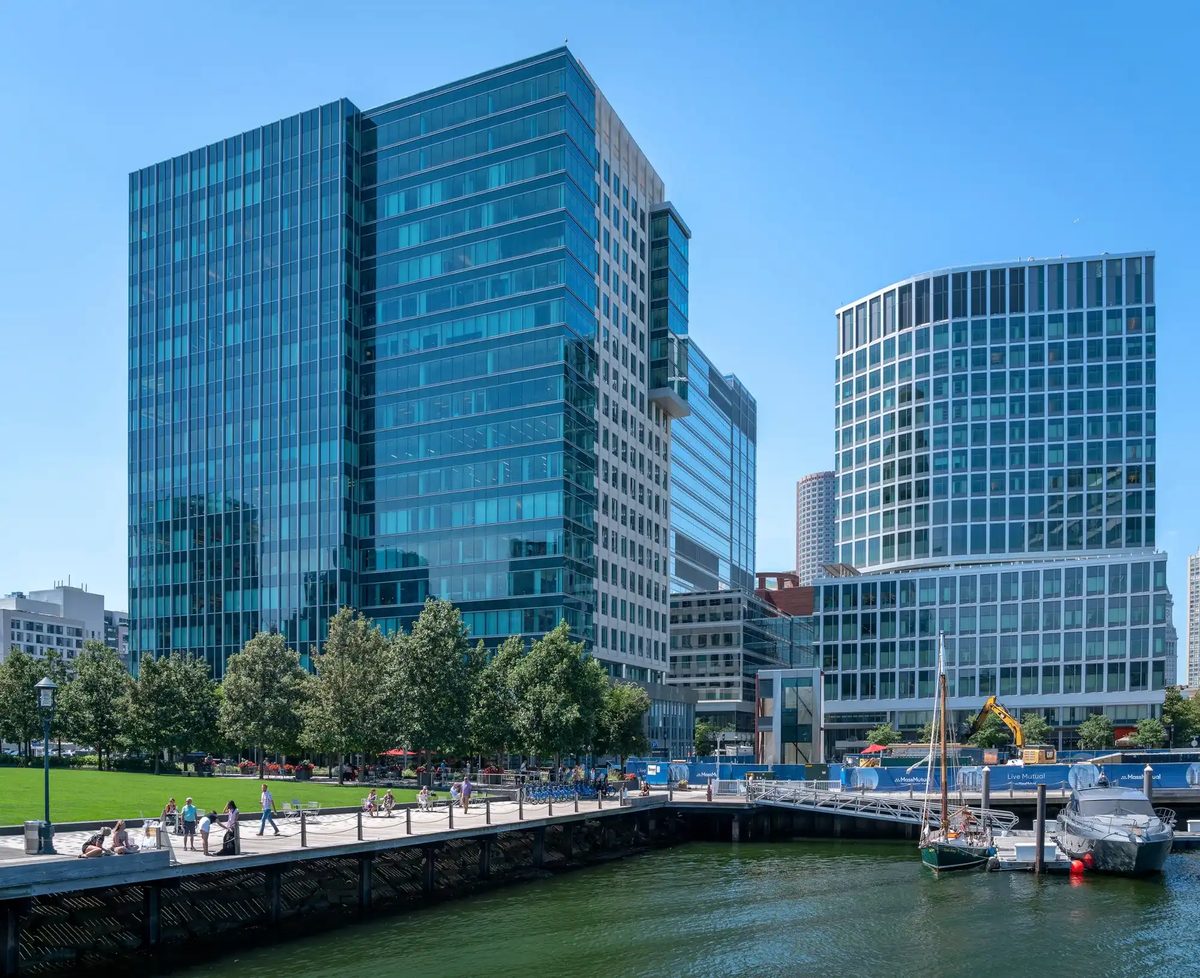
Oxford Properties Acquires One Marina Park Drive From Clarion Partners for $435M in Boston Seaport
Portugal Commercial Real Estate Investment Hits €930M in Q1 2026, Retail and Hospitality Lead Surge