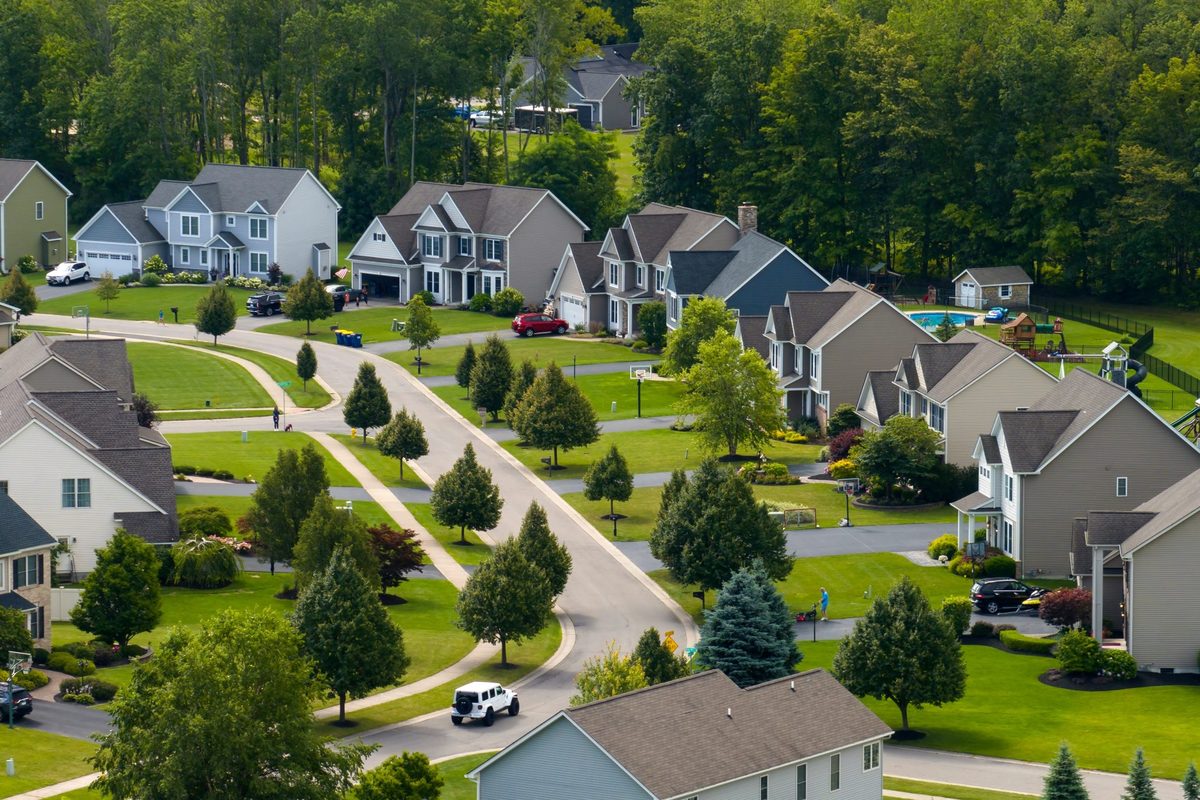
American Realty Advisors: Slowing Population Growth Shifts Multifamily Real Estate Demand, Spotlights Dallas-Fort Worth

American Realty Advisors has released new market commentary indicating that shifting population growth trends are altering the demand landscape for multifamily real estate, with implications for investors across gateway and Sun Belt markets alike. The firm says long-term strategy should factor in emerging shifts in U.S. population dynamics, as broad demographic tailwinds that supported apartment demand in prior cycles are moderating.
Immigration's Outsized Role in U.S. Population Growth
According to the commentary, natural population growth in the United States has slowed materially over the past decade, driven by declining birth rates and the aging of the Baby Boomer generation. As a result, immigration has assumed a larger share of overall population change. Between 2010 and 2020, immigration represented approximately 45% of overall population change in the U.S. That share increased sharply in subsequent years: between 2022 and 2024, immigration accounted for more than 80% of net population growth, according to the firm. Without immigration during that period, the firm notes, overall population growth would have been minimal.
Prior to recent changes in federal immigration policy, immigration was projected to drive roughly two-thirds of annual population growth over the next five years. The firm's latest analysis suggests those inflows may now come in closer to half of earlier estimates, a shift the firm says carries direct implications for the broader economy and for real estate markets.
Multifamily Real Estate Demand Faces Structural Headwinds
For multifamily real estate, American Realty Advisors describes the effect as straightforward: slower net population growth tends to translate into fewer new households, which is the foundational driver of apartment demand. The firm notes that elevated immigration in recent years added renters beyond what natural population growth alone would have produced, helping many markets absorb new supply — particularly gateway markets such as New York, Los Angeles, and Miami.
The commentary explains that this dynamic affects the non-institutional apartment segment first, as a meaningful share of new immigrants tend to live with family or in smaller, lower-cost buildings upon arrival rather than renting Class A apartments. However, the firm notes the effects eventually reach institutional properties, as fewer new entrants into the country means fewer households moving up the rental curve to become Class A renters over time.
The firm stops short of predicting an immediate reversal in renter demand, but cautions that capturing demand will depend less on broad migration tailwinds and more on asset selection, location quality, and competitive positioning. In markets with sizable development pipelines, even a modest slowdown in household formation can stretch lease-ups, increase concessions, and weigh on effective rents. In markets where supply is more contained, the adjustment may be less pronounced, though rent growth is still likely to settle closer to long-term norms rather than prior-cycle highs, according to the firm.

Domestic Mobility Trends Compound the Challenge
American Realty Advisors also addresses the assumption that domestic migration could offset slower immigration-driven demand. The firm argues that domestic mobility has been declining for decades, meaning the overall flow of movers is thinner than in prior cycles. Fewer households are moving across state lines, which reduces the pool of renter households available to backfill new apartment deliveries in high-growth markets.
The firm points to Florida and Texas as examples. Both states were among the biggest domestic migration winners in recent years, but the firm notes that inflows have settled back from the unusually strong pace of the last cycle. The firm acknowledges that the core reasons people relocated to those states — business-friendly environments, tax advantages, and lifestyle appeal — remain intact. However, because the overall pool of movers is smaller, competition for each new resident has intensified.
Dallas-Fort Worth Highlighted Amid Broader Shifts in Real Estate
Despite the broader moderation in population-driven demand, American Realty Advisors singles out Dallas-Fort Worth as a market that continues to demonstrate characteristics favorable for long-term apartment demand. The firm cites the metro's diversified economy, the absence of a state income tax, warmer climate, and a relatively attainable cost of living as factors that continue to attract younger households and employers. The firm describes DFW as checking many of the boxes that matter most for long-term apartment demand, including jobs, affordability, migration appeal, and demographic depth.
The commentary includes a chart comparing net migration levels into Chicago, Dallas-Fort Worth, Los Angeles, and Miami, illustrating diverging migration patterns across major U.S. metros.

Market Implications: Sharper Underwriting Required
American Realty Advisors frames the population shift not as a signal of disappearing demand, but as a signal that broad demographic tailwinds can no longer carry multifamily performance on their own. The firm states that in the prior cycle, strong population growth made it easier for many markets to absorb new supply and support optimistic rent assumptions. Going forward, the firm says outcomes are likely to depend more on submarket selection, entry basis, pipeline awareness, and asset positioning.
The firm concludes that lower overall population growth prospects are likely to be a nationwide factor in the cycle ahead, but that not all markets will feel that pressure equally — underscoring the importance of localized conviction and disciplined underwriting in multifamily real estate investment strategy.
The commentary is dated March 6, 2026, and was published on the firm's website on April 11, 2026.
Sources
Related Articles
Portugal Commercial Real Estate Investment Hits €930M in Q1 2026, Retail and Hospitality Lead Surge
Urban Partners Sells 218-Home Tingbjerg Portfolio to Home.Earth
JLL Arranges $57M Refinance for Sofitel Philadelphia at Rittenhouse Square Through Simmons Bank