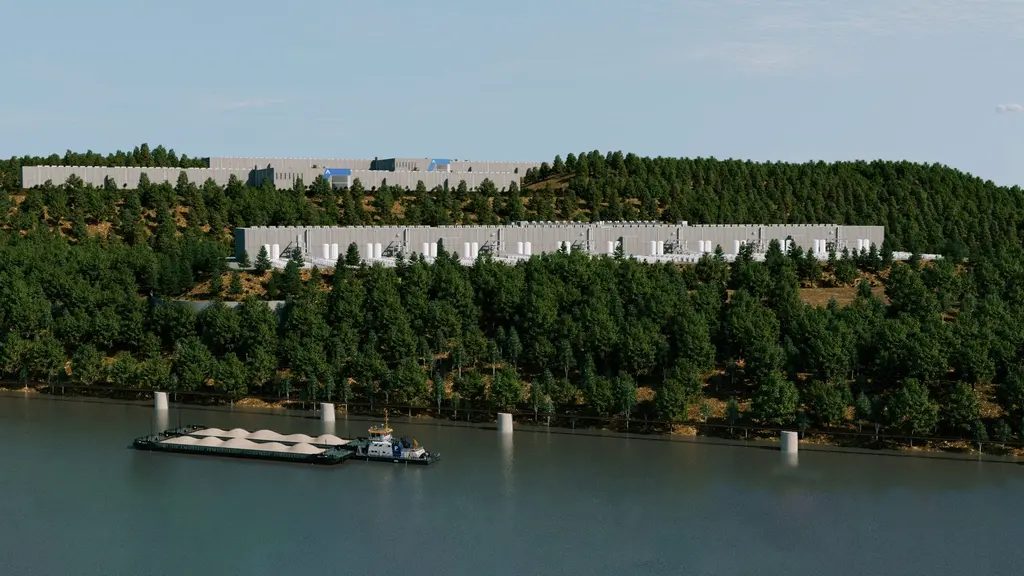
DayOne Data Centers Plans 200MW Campus in Imari, Saga Prefecture, Expanding Japan Platform Beyond Tokyo
DayOne Data Centers, a Singapore-headquartered global digital infrastructure platform, and Imari City announced plans on Oct. 2 to develop a new data center campus in Imari, Saga Prefecture, Japan, with 200MW of grid power. The project expands DayOne's Japan platform beyond Tokyo and establishes a presence in southwestern Japan.
The campus will be developed in phases on a site of more than 133,000 square meters, or roughly 1.43 million square feet, within the Imari East Industrial Park. The development is supported by Saga Prefecture and Imari City and includes 160MW of secured powered land. The initial phase is targeted to begin operations in 2030.
Imari Data Center Campus: Project Details
The Imari campus sits in Kyushu, Japan's southernmost main island. The site covers more than 13.3 hectares, or about 32.9 acres, within the Imari East Industrial Park.
DayOne said the campus will incorporate sustainability considerations across engineering, construction and operations, including a focus on energy efficiency, responsible resource management and minimizing environmental impact. The company expects the campus to support approximately 60 to 80 full-time roles once fully operational, in addition to local employment generated during development, construction and operation.
The development is expected to attract new investment and create opportunities for local businesses, according to DayOne.
Comments From DayOne CEO Jamie Khoo and Imari's Mayor
Jamie Khoo, chief executive officer of DayOne, said, "Kyushu has the potential to become an important new location in Japan's digital infrastructure landscape. The Imari campus brings together Kyushu's regional advantages, the city's forward-looking leadership, and DayOne's experience in creating new digital infrastructure markets at scale. Working closely with Imari City, local partners, and the community, we intend to deliver the campus responsibly, build local capabilities, and create lasting value for Imari City, Saga Prefecture, and the wider region."
Hironobu Fukaura, mayor of Imari City, said, "I would like to express my gratitude to DayOne for choosing Imari City. We welcome DayOne's decision and are excited about the opportunities this investment will create for our economy, our businesses, and future generations."
DayOne said it believes regional markets such as Kyushu can play an increasingly important role in supporting Japan's next phase of digital growth as demand for AI, cloud and digital services accelerates. The company said Kyushu combines proximity to major Asian markets with a growing role in strengthening the resilience of Japan's digital economy, and that adding capacity outside the country's largest metropolitan data center clusters can help distribute critical infrastructure across a broader range of locations.
Why Kyushu: Japan's Data Center Demand and Power Constraints
Japan's data center demand is being reshaped by artificial intelligence, cloud computing and high-performance computing. AI-focused facilities require substantially more electricity and higher rack densities than conventional data centers, making grid access, substations, cooling and land increasingly important development constraints.
Japan's maximum power demand attributable to new and expanded data centers is projected to rise from approximately 0.64 GW in fiscal 2026 to 3.28 GW in fiscal 2030 and 6.61 GW in fiscal 2035. Associated annual electricity consumption is projected to increase from about 4.8 TWh to 49.4 TWh over the same period. Another industry estimate places Japan's installed data center IT load at approximately 3.8 GW in 2026, with capacity potentially reaching about 7 GW by 2031.
Demand is concentrated around Tokyo and Osaka, while renewable generation and available land are more plentiful in regions such as Hokkaido and Kyushu. Japan's "Watt-Bit Collaboration" policy framework is intended to better align computing infrastructure with power and telecommunications capacity in regional markets, including Kyushu. Industry commentary identifies Kyushu as having comparatively favorable power conditions, including renewable generation and additional supply associated with restarted nuclear facilities. The island is also geographically close to major Asian markets and has access to submarine-cable infrastructure.
Locating outside Tokyo can also reduce exposure to land scarcity and grid-connection queues. Industry research estimates grid-connection timelines of eight to ten years in Tokyo, compared with three to five years in Osaka.
DayOne's Japan Expansion and Corporate Context
The Imari announcement follows DayOne's earlier entry into Japan with a 40 MW Tokyo campus. DayOne and Gaw Capital announced a Tokyo hyperscale campus in August 2025 at Fuchu Intelligent Park, with total planned IT capacity of 80 MW and approximately 66,360 square meters of gross floor area. In September 2026, DayOne announced it had broken ground on a 42 MW Kodaira data center campus in Tokyo.
The 200MW grid allocation at Imari is not directly comparable with those projects, as the Imari figure refers to grid power while the Fuchu figure refers to IT capacity.
DayOne announced a US$2.0 billion Series C financing in January 2026. The company said the capital would support expansion across the SIJORI region, which comprises Singapore, Johor and Batam, as well as Thailand, Japan and Hong Kong, with an emphasis on high-density, AI-ready capacity.
Market Implications
The Imari campus adds a regional site to DayOne's Japan portfolio, which until now has centered on Tokyo. Phased development on a large industrial park site, backed by secured powered land, reflects a broader pattern in which data center developers look beyond congested metropolitan clusters for land and power. The project remains in the planning stage, with the first phase targeted for 2030.
Sources
More Development
Applied Digital Brings 75 MW Online at Polaris Forge 1, Lifting Ellendale Campus to 250 MW
Crusoe Reveals It Is Developing Google's Data Center Campus Near Amarillo, Texas