MCB Real Estate: Retail Real Estate Renaissance Is Structural, Not Cyclical, Firm Says After ICSC 2026

LAS VEGAS — The current strength in retail real estate is the product of structural supply constraints built over more than a decade, not a temporary market rebound, according to a senior executive at MCB Real Estate who attended the ICSC Las Vegas 2026 conference.
Daniel Taub, Senior Managing Director and Head of Retail at MCB Real Estate, published a market commentary following the conference, arguing that more than ten years of minimal net new construction has fundamentally reshaped the supply-demand balance in retail real estate. Taub, who noted he has attended ICSC Las Vegas for 30 consecutive years, said the energy at this year's conference confirmed that retail has moved beyond stabilization and into a period of sustained, momentum-driven growth.
"This cycle is not driven by exuberance but defined by constraint," Taub wrote. "More than a decade of limited net new development has structurally reshaped the supply-demand balance, forcing operators to become more disciplined, data-driven, and selective in how they deploy capital."
A Decade of Constrained Development Reshapes the Market
According to Taub, the retail real estate sector is now benefiting from over ten years of minimal net new construction. He attributed the ongoing supply constraint not to deliberate market strategy, but to the combined pressures of capital markets conditions, rising construction costs, and entitlement complexity — factors that have collectively limited new development activity.
The result, Taub wrote, is a retail sector characterized by high occupancy, steady rent growth, and renewed institutional interest. He noted that capital that previously avoided retail is now actively reallocating toward the sector, citing the durability of its income profile in a supply-limited environment. Transaction volume and leasing velocity, he said, reflect this renewed confidence, as demand for quality space continues to outpace availability.
"What some might frame as 'good timing' is the byproduct of a long period of disciplined capital restraint across the industry," Taub wrote.
Open-Air Retail Emerges as a Dominant Format
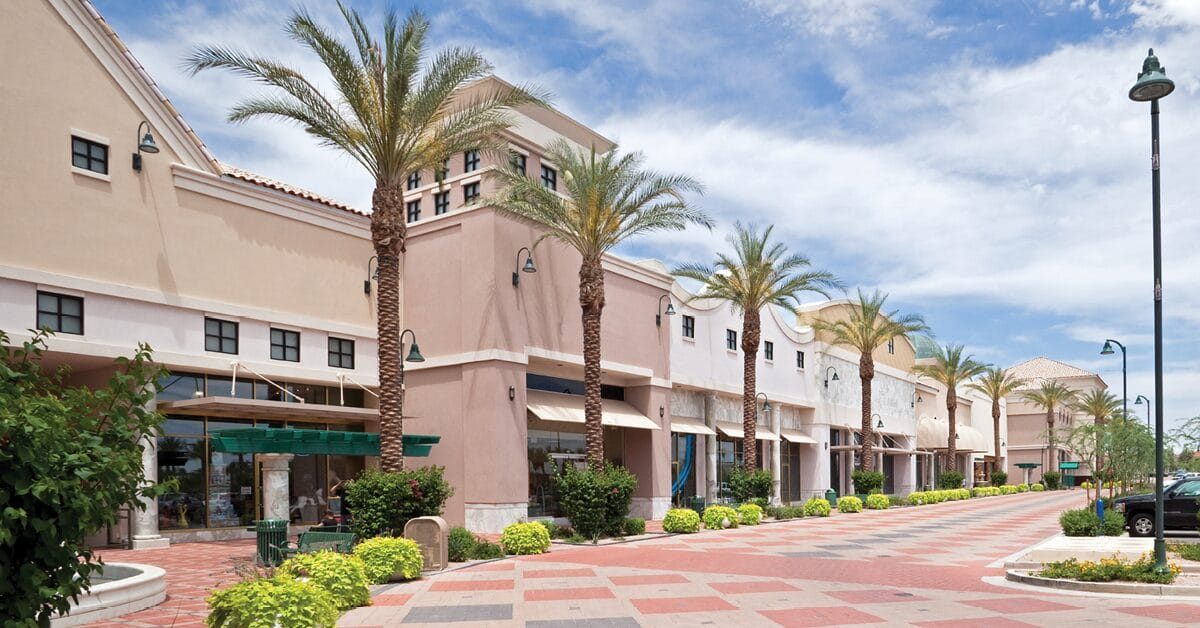
Within the broader retail real estate market, Taub identified open-air, surface-parked retail assets as a clear beneficiary of current conditions. He noted that even unanchored strip and convenience centers have gained meaningful traction with both investors and tenants in recent years, narrowing the historical performance gap with grocery-anchored properties.
Taub attributed this shift to a fundamental change in consumer behavior toward speed, accessibility, and daily-use convenience. He described these properties as offering durable cash flow, operational simplicity, and broad tenant demand — characteristics that, in a supply-constrained market, position them as core assets in institutional portfolios.
On the tenant side, Taub said the post-pandemic retail reset has produced a more resilient and focused tenant base. Leasing activity has structurally shifted away from discretionary, apparel-heavy merchandising toward a mix centered on daily needs, value, and services. He identified food and beverage, value-oriented retail, wellness, and medical and service-based uses as the primary growth categories in today's market.

Capital Agility and Data-Driven Decisions
Taub argued that capital flexibility has become a defining differentiator in the current environment. He said firms with multi-sector capabilities are better positioned to allocate capital dynamically — pursuing retail opportunities when available and deploying into complementary sectors such as multifamily or mixed-use when retail inventory tightens.
This flexibility, he added, also enables sophisticated operators to pursue retail properties with complicated capital stacks that are well-located but constrained by capital structure inefficiencies or fragmented ownership. Resolving those issues and repositioning assets, Taub wrote, can unlock value that is often inaccessible to less flexible capital.
On decision-making, Taub said the era of relying on instinct as a primary underwriting tool has passed. He described a shift in competitive advantage — from access to transactions, to access to better information and faster insights — driven by tools including AI-enabled site selection and real-time portfolio performance analytics.
"Landlords, retailers, and investors who can interpret data more effectively, and act on it more quickly, are consistently outperforming their peers," Taub wrote.
Consumer Health and Macroeconomic Uncertainty Remain Key Variables
Despite the structural tailwinds, Taub cautioned that retail performance ultimately remains tied to the health and behavior of the consumer. He pointed to what he described as a K-shaped economy, in which pressure on middle- and lower-income households introduces uncertainty around the durability of consumer spending.
While the luxury segment continues to demonstrate resilience, Taub said broader retail success will increasingly favor operators who deliver a consistent combination of value, convenience, and customer experience. He also cited geopolitical volatility and macroeconomic uncertainty as persistent variables, noting that investors are continuing to prioritize grocery-anchored and necessity-based formats in response.
Taub concluded that the themes dominant at ICSC 2026 — supply constraints, tenant selectivity, and the outperformance of open-air, necessity-driven retail — align closely with MCB Real Estate's long-standing investment approach. The firm's focus on grocery-anchored and daily-needs retail, he wrote, positions its portfolio within what he characterized as the most durable segment of the market.
"Retail is no longer a recovery story, but a structurally advantaged sector operating within a constrained supply environment," Taub wrote. "The 'retail renaissance' is not a temporary rebound. It is a long-term reset."

Sources
MCB Real Estate: "The Retail Renaissance Is Structural, Not Cyclical: Insights from ICSC 2026" — Published May 28, 2026.
More Market Commentary
Portugal Commercial Real Estate Investment Hits €930M in Q1 2026, Retail and Hospitality Lead Surge
Retail Real Estate Leads CRE Asset Classes in 2026 Despite Tariffs and Iran War, CoStar Data Shows