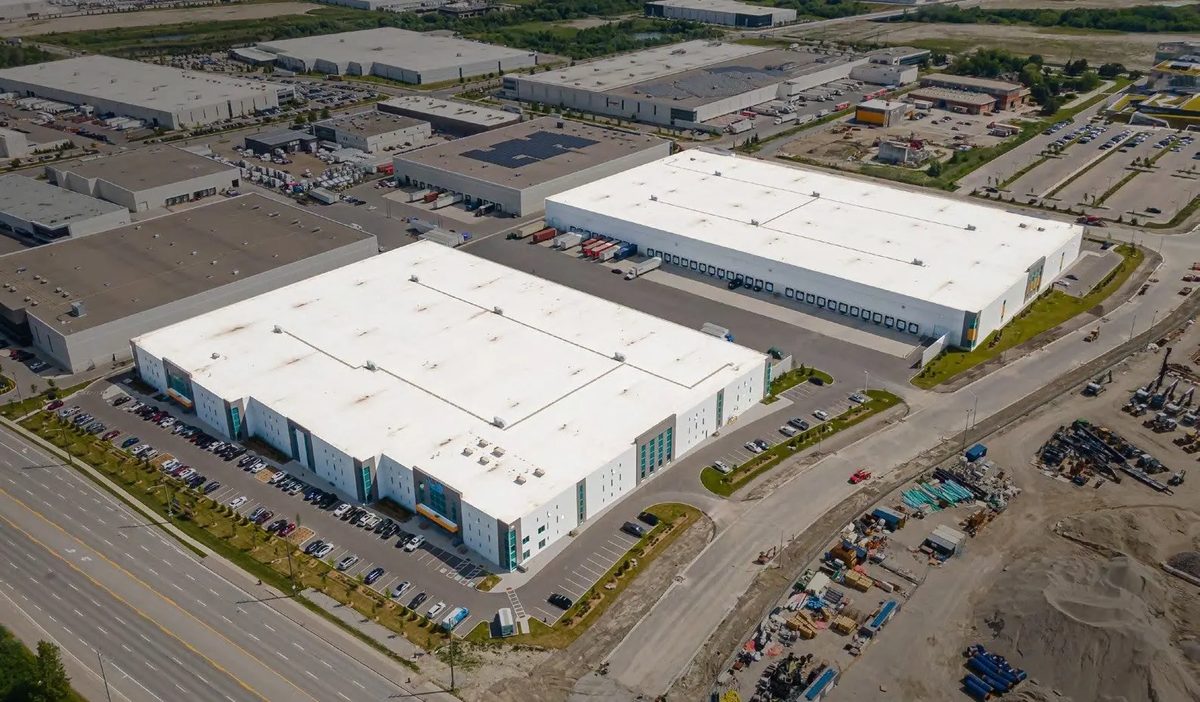
TradeLane Properties Completes Realization of Fund I, a $105.6 Million Chicago Industrial Portfolio

OAKBROOK TERRACE, Ill. — TradeLane Properties (TLP) announced Nov. 17 the full realization of the remaining property investments in TradeLane Properties Fund I, the firm's inaugural value-add fund. The fund invested approximately $105.6 million across 17 industrial buildings totaling about 1.6 million square feet in the Chicago market.
Upon distribution of the fund's remaining cash reserves, TradeLane Properties Fund I is expected to generate a final net realized internal rate of return (IRR) of 22.1% to 22.2% and 1.62x distributions to paid-in capital (DPI) over a seven-year period, the firm said.
TradeLane Properties Fund I Returns Versus Benchmarks
According to TradeLane Properties, both return measures exceed the respective 95th-percentile MSCI Private Assets (formerly Burgiss) benchmarks for 2019-vintage private real estate value-add and opportunistic funds.
Launched in 2019, Fund I deployed approximately $105.6 million across the 17-building Chicago industrial portfolio. The portfolio's implied average building size is roughly 94,100 square feet, and the implied investment basis is approximately $66 per square foot.
Strategy and Platform Implications
TradeLane Properties said the realization of Fund I demonstrates its ability to execute a value-add investment strategy across the full investment lifecycle. The firm said the investment discipline, active asset management approach and vertically integrated operating capabilities instituted through Fund I continue to inform its broader industrial real estate investment platform and the execution of its series of value-add investment funds.
TradeLane Properties is a privately held industrial real estate company that focuses on acquiring, developing, redeveloping and operating industrial real estate facilities in key markets across the Central United States, according to the firm.
Chicago Industrial Market Context
The disposition comes as Chicago industrial fundamentals have improved from a recent supply-driven slowdown. Third-quarter 2026 vacancy estimates range from 4.7% to 5.8%, depending on the research provider and market definition. CBRE reported 3.6 million square feet of third-quarter net absorption, up 52% year over year, while Cushman & Wakefield reported 7.5 million square feet of year-to-date absorption, up 43% year over year.
Rents have continued to rise. Cushman & Wakefield recorded asking rents up 3.9% year over year to $7.53 per square foot, while Savills reported an average of $8.47 per square foot, up 6.9% year over year. The differences reflect varying coverage universes and rent definitions.
The investment market remains price-sensitive. Matthews reported average Chicago industrial cap rates of 7.47%, up for 19 consecutive quarters, with pricing of $108 per square foot. Hiffman recorded approximately 15 million square feet traded across 95 property-level sales in the third quarter, at weighted-average pricing of about $118 per square foot.
Supply remains a factor. Hiffman reported total availability of approximately 125.4 million square feet and total vacancy of 5.8% in the third quarter of 2026. Cushman & Wakefield said 8.9 million square feet was leased but unoccupied, meaning headline vacancy includes space awaiting tenant move-ins.
Outlook
TradeLane Properties' exit from its seven-year inaugural fund occurs in a Chicago industrial market with stronger absorption and rent growth than in recent quarters, alongside cap rates above prior-cycle levels. The firm said the approach used in Fund I continues to inform its series of value-add industrial funds.
More Property Transactions
InLight Real Estate Partners Sells 706,960-SF Bridgeway Business Center in Suffolk, Virginia, to Grandview Partners