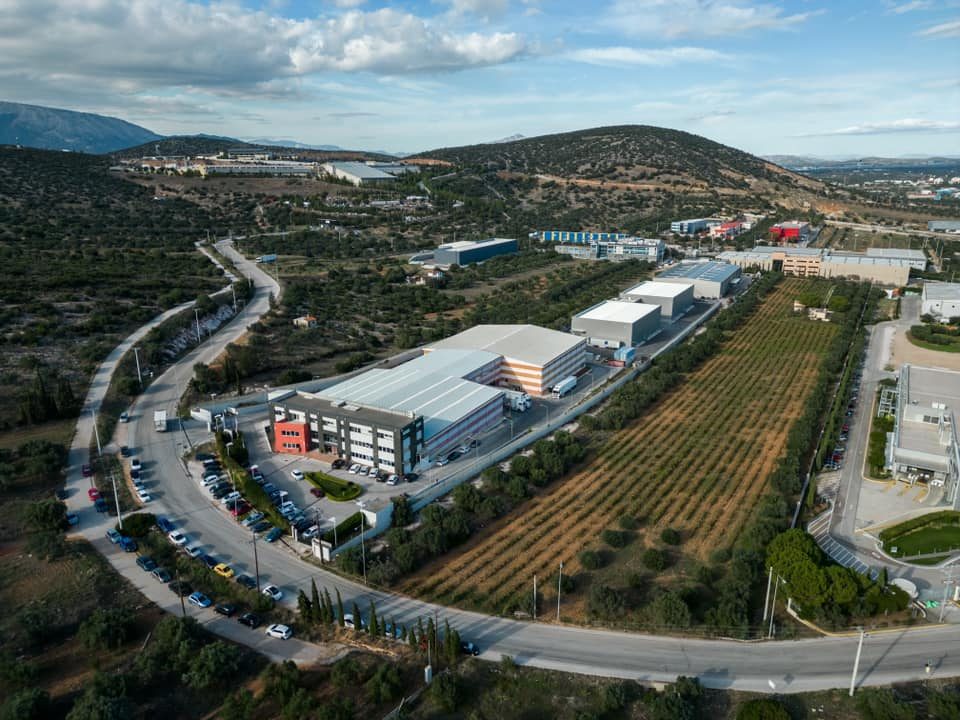
Dexus and Boral Form Joint Venture to Develop 630-Hectare Industrial Precinct at Ravenhall
Dexus and Boral have formed a joint venture to develop a 630-hectare industrial precinct at Ravenhall in Melbourne's western corridor, targeting up to 2.5 million square metres of prime logistics space at full build-out and an expected $14.9 billion contribution to the Victorian economy.
The precinct, situated roughly 20 kilometres from Melbourne's CBD, is positioned with direct access to the Western Ring Road, the Port of Melbourne, Melbourne Airport and the future Outer Metropolitan Ring Road. The site currently operates as an active Boral quarry, and development is expected to unfold over a multi-decade horizon as quarrying activity progressively winds down.
Structure of the Dexus-Boral Joint Venture
Under the joint venture structure, Boral retains a 50% interest in the developed precinct, with Dexus and its capital partners holding the remaining 50% through staged superlot unit trusts. Boral contributes land on a staged basis at market value following rezoning, rather than through an upfront bulk transfer of the landholding.
Dexus expects to retain a minimum 10% look-through principal interest per superlot, with the balance funded by third-party capital. Each superlot is expected to be levered. Dexus acts as trustee, investment manager, development manager and property manager across the project lifecycle, earning management fees beginning when it invests into each superlot.
Boral's position as one of Australia's largest construction materials businesses also creates a direct supply chain opportunity across the multi-decade build program, deepening its alignment with the precinct's long-term performance.
Vision and Strategic Rationale
Chris Mackenzie, Executive General Manager, Industrial at Dexus, described the opportunity as generational in scale. "In short: 630 hectares. 2.5 million sqm. $14.9 billion to the Victorian economy. There's nothing else like it," Mackenzie said.
"It can't be overstated that this opportunity to partner with Boral at Ravenhall is once in a generation. You're looking at a site of scale in Melbourne's western corridor, which has become the most important logistics geography in Australia," he added.
Mackenzie said the site's scale enables planning, infrastructure and tenant amenity to be considered at a precinct level — a capability not achievable with individual sites. "It becomes its own ecosystem," he said.
The precinct is expected to generate approximately 3,000 jobs at peak construction and support more than 31,000 ongoing direct, indirect and induced jobs during operations.
Phasing, Capital Deployment and Adjacent Assets
Dexus has indicated that early activation will focus on areas that connect efficiently with existing infrastructure and adjacent Dexus-managed landholdings — specifically Horizon 3023 and 220 Riding Boundary Road, both located in Ravenhall. Horizon 3023, situated at 29 Momentum Way, Ravenhall, is a 127-hectare urban industrial development comprising 14 existing facilities with Green Star-aligned design, solar and battery storage capability, and approximately one-third of the estate still to be developed. Dexus describes Horizon 3023 as fully leased to global covenant customers.
"This adjacency gives us servicing certainty, infrastructure efficiency and immediate market presence from day one," Mackenzie said of the early activation strategy.
Beyond the initial stages, Dexus has described a staged, long-term program shaped by demand rather than a fixed calendar. "We're not trying to develop the 2.5 million sqm simultaneously," Mackenzie said. "Scale like this demands discipline — not ambition for its own sake."
The capital structure is designed to limit Dexus's upfront balance sheet exposure while securing long-dated fee income from what the firm expects to become Australasia's largest institutionally held logistics precinct. "This is a large-scale, long-term opportunity, and the JV allows Dexus to contribute our development, investment management and operational capability while maintaining discipline around capital deployment," Mackenzie said.
Market Context and Investment Thesis
Melbourne's industrial market vacancy is currently running at approximately 4–5%, reflecting underlying demand from logistics, e-commerce, advanced manufacturing and supply chain consolidation. Dexus has framed the investment thesis around long-term structural fundamentals rather than a single point in the cycle, noting that the program will span multiple market cycles before completion.
"Bringing 2.5 million sqm forward directly addresses the structural undersupply in Melbourne's west. Without a proponent-led approach of this kind, this land simply stays locked up," Mackenzie said.
Development at the site remains subject to rezoning and business plan approvals. Boral's surplus property program identifies Ravenhall as a key value-creation lever, with rezoning underway and development to proceed via staged superlots over a 20-to-30-year horizon.
Mackenzie pointed to lessons from Horizon 3023 as directly informing the approach at Ravenhall, particularly around transport infrastructure, government engagement and the importance of precinct identity. "Transport infrastructure is the single biggest variable in activating a large-format industrial site. It can make or break your timeline," he said. "The best industrial precincts aren't just a collection of sheds. They have a coherent identity, quality public realm and an amenity offer that attract customers and supports their growth and retention."
Sources
More Joint Ventures
The Davis Companies and Intersect Development Group Launch 462,000-SF Industrial Joint Venture in Gastonia, North Carolina