Vistry and Sanctuary Expand Joint Venture for 2,204-Home Hopfields Community in Worcester

Vistry and Sanctuary have expanded their partnership through a joint venture that will help bring forward Hopfields, a 2,204-home mixed-use community in south Worcester, England, the companies announced Nov. 10. The development will provide a mix of open market, social and affordable homes.
Hopfields Joint Venture Puts Vistry's Refocused Strategy Into Practice
Vistry described the partnership as an application of the strategy it set out in September, under which the group will become a more focused business, concentrating on regions, sites and partnerships where its mixed-tenure model performs best. The Midlands is one of the group's priority regions, alongside the North and West, the company said. Long-term relationships with housing associations such as Sanctuary remain central to how Vistry delivers its partnerships-based business model, according to the announcement.
Adam Daniels, Chief Executive of Vistry, said the findings of the CEO Review set out in September committed the company to concentrating on the regions, sites and partnerships where its mixed-tenure model performs best. "Hopfields serves as a strong example of our renewed focus in practice," Daniels said. "The Midlands is one of our priority regions, the site already benefits from planning consent, and it is being delivered through the long-term partnership approach on which our model is built. Our aim now is to replicate this disciplined approach across the Group, and we expect Hopfields to be one of many schemes that reflect the way we will operate in the years ahead."
The announcement follows Vistry's first-half 2026 results, in which adjusted revenue fell 9% to £1.703 billion and completions declined 8% to 6,304 homes from 6,889 a year earlier. The company has also set out plans to reduce its operating regions from 25 to 12 as part of a restructuring aimed at a smaller, more disciplined platform.
Project Details: Location, Uses and Planning Status
Hopfields is located between St Peter's and Kempsey and forms a key part of Worcester's southern urban extension. Project materials place the wider site broadly between Bath Road, Taylors Lane, Norton Road and Broomhall Lane. The scheme is part of an approximately 2,600-home southern urban extension planned for Worcester.
Outline planning permission was granted in 2022, so the joint venture does not represent a new planning consent. Subsequent reserved-matters and detailed applications will still be required for individual parcels. Vistry submitted detailed plans in August for 246 homes on the western edge of the site, south of Taylors Lane. That phase is proposed to include 20% affordable housing, public open space and children's play areas.
The wider plans include a local centre, primary school, employment space, sports and community facilities, a hotel, care provision, health facilities and new green infrastructure.
Affordable Housing and Delivery Routes
At least 20% of the homes at Hopfields will be social and affordable, in line with the development's planning obligations, with flexibility to deliver additional homes as affordable housing, the companies said. Based on the 2,204-home total, the 20% minimum equates to roughly 441 homes, subject to final tenure and parcel mix.
The site will be brought forward through a range of routes, including Vistry's partnership-led model, open market homes, and opportunities for additional delivery partners to develop parcels across the site.
Hopfields is part of Sanctuary's programme to deliver more social and affordable homes and invest in sustainable communities, the announcement said. Craig Moule, Group Chief Executive at Sanctuary, said: "Hopfields represents a significant opportunity to create a thriving new community and provide much-needed homes for people across Worcester. Building on our long-standing partnership with Vistry, this development will deliver new homes, supported by the infrastructure, services and green spaces that help communities flourish."
Moule added: "At Sanctuary, we are committed to playing our part in increasing the supply of new, high-quality social and affordable housing, and investing in places where people want to live. Hopfields reflects that ambition and demonstrates what can be achieved through strong partnerships, focused on long-term community benefit."
Timber-Frame Construction Through Vistry Works
Many of the homes will be built using timber frames manufactured by Vistry Works, the group's in-house manufacturing operation, which Vistry said sits at the core of its operational and sustainability strategy. The company said timber-frame construction is around six weeks faster than traditional brick and block and reduces embodied carbon by around 30% over a 60-year period, while supporting consistent quality on site.
James Warrington, Executive Chair, North, South Midlands and East Division at Vistry, said: "Hopfields is a major investment in Worcester's future and shows what can be achieved when land, housing and infrastructure are brought together through a partnership-led approach." He added: "Working with Sanctuary, we can deliver homes for a range of needs while creating the facilities, green spaces and connections that make a new community thrive. With our established housebuilding brands and the manufacturing capability of Vistry Works, we have the scale and expertise to deliver high-quality homes efficiently over the lifetime of the development."
Outlook for Worcester's Southern Urban Extension
With 2,204 homes, Hopfields accounts for most of the approximately 2,600-home southern urban extension planned for Worcester. Its scale could make it a local reference point for land release, affordable housing delivery and competition among housebuilders seeking parcels or partnership opportunities on the site. The ability to bring in additional delivery partners may allow parcels to be developed through different routes over the life of the scheme.
Sources
More Development
Kairoi Residential and Clarion Partners Complete 419-Unit The Gild at Metro Center in Aurora, Colorado
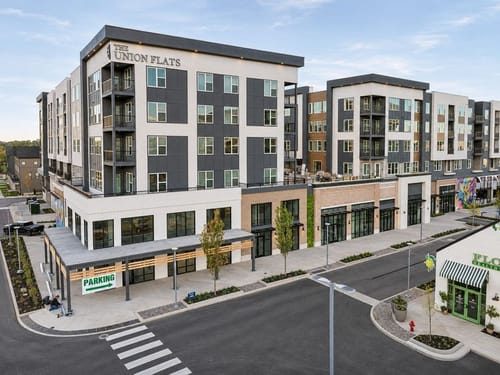
Thompson Thrift Development Opens First Restaurant, Welcomes Residents at $750 Million The Union in Fishers